
Definition from Wikipedia – A rookie card is a trading card that is the first to feature an athlete after that athlete has participated in the highest level of competition within his or her sport.
For North American collectors, the most sought-after cards have almost always been the infamous “rookie card”. Think of the iconic Mickey Mantle, Michael Jordan or Wayne Greztky rookie cards. But what exactly should be considered a rookie card? Historically, the rookie card comes from the first of card to show a player playing a season in the highest leagues. Back in the day, you would check the stats for the year and then check the career totals, if the numbers were the same, you probably had a rookie. Gretzky is a notable exception as his rookie was issued from his year with Edmonton in the WHL before he joined the NHL. However, these days, rookies are usually released even before they play in the professional leagues.
Main profile card
But let’s dig a little deeper. It is important to note that there is a difference between rookie card and rookie year. For instance, Mike Bossy, whose rookie card #115 is from the 1977-78 year also had a “Highlights” card # 1, where he featured for breaking the rookie scoring record.

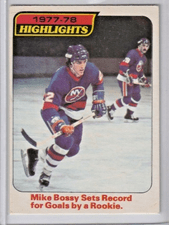
However, generally collectors agree that the base card #115 is the rookie whereas the Highlights #1 card is not. So let’s call the #115 a profile card and the #1 card a secondary card. Secondary cards are then defined as all types of cards that are not the main profile card such as statistical leaders, All Stars, In Action, Team cards, Final games such as World Series etc. You get the point.
First is first
Occasionally, a set will be issued using almost exactly the same images as the previous year. A good example is the Cadet Sweets Famous Footballers series. The 1958 is almost identical to the 1959 except on the back in the 1958 is slightly larger text 28 mm and inverted. The 1959 backs have smaller font 19 mm and the backs are not inverted. The 1960 is also exactly the same except slightly different writing on the back.

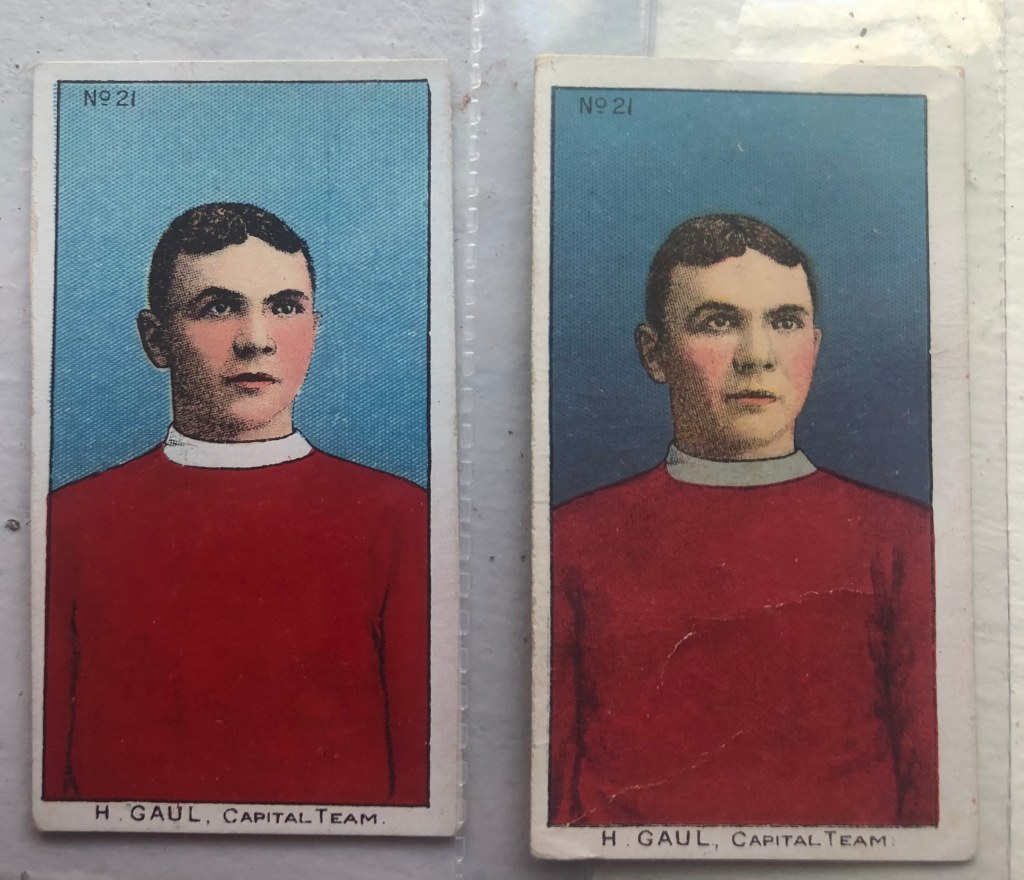
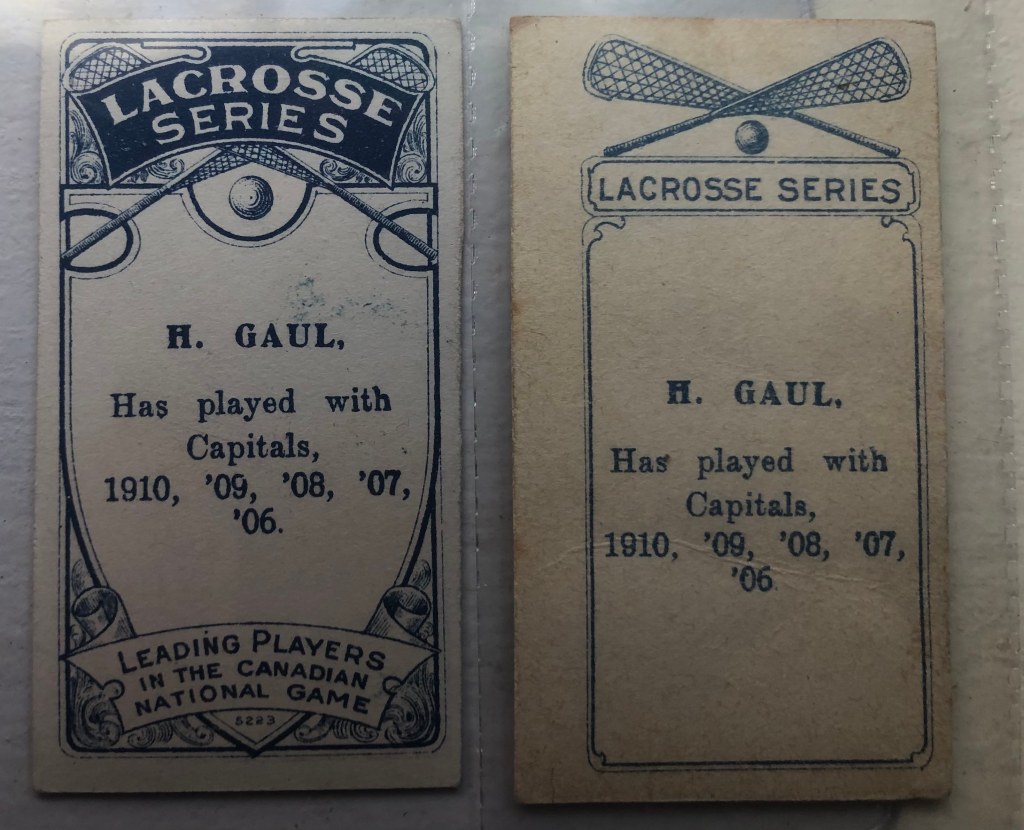
The same situation occurs in the C60 and C59 Lacrosse series issued by imperial Canada. The pictures on the front are virtually identical but have different backs. In both cases, most collectors would agree that the older of the two sets is the true rookie card.
But what happens when a Secondary card is released before the main profile card? That is exactly what happened for a historic association footballer called Billy Meredith. Ogden’s cigarettes in 1901 released card entitled “Meredith at Work” which depicts Billy Meredith in action kicking a corner kick. Billy Meredith only received a profile card from a different cigarette company (one from Wills and one from Clarke) set the following year in 1902. This puts a collector in an interesting conundrum. Which should be considered the rookie?
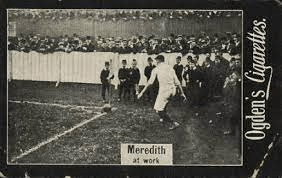
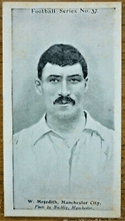
Ones’ first instinct might be to argue that the oldest of cards should be considered the rookie. However, my own opinion is that the profile card of 1902 from Wills and/or the one from Clarke is the true rookie for the same reason that we consider the Bossy #115 the true rookie, i.e., rookie card must profile the player themselves as opposed to what they are doing or what they have done. This point becomes more obvious when we consider team cards. If, for example, a player is included in a card as part of a team card before their profile card, few would argue that this should be considered a player’s rookie card. In cases where a player is shown on a card before the player is profiled may be called the players card debut.
However, that does not mean that more than one player can’t feature on one card. An obvious example is baseball greats Nolan Ryan and Jerry Koosman that both feature on the famous 68 Topps rookie card. What is key here, is that the card profiles the players themselves to be considered a rookie. So where does that leave us? While the Ogden’s card debut of Meredith is special and should receive credit for being the first to depict the player as a professional, it should not be considered the rookie.
Picture trumps name
What about cards and names?
Some card company have issued cards without any names of the players, but rather mention the team; however, if these players have been clearly identified they can be considered the rookie card. For example, the 1906 Ogden’s Football Club Colours issued cards identifying the team but does not explicitly mention the player being profiled. Manchester United legend Charlie Robert’s rookie can be found in this set even though it does not mention his name. Another famous example is the 1929 Sports from All Nations from WA & AC Churchmans, which is generally accepted as a Babe Ruth card despite not explicitly mentioning his name.
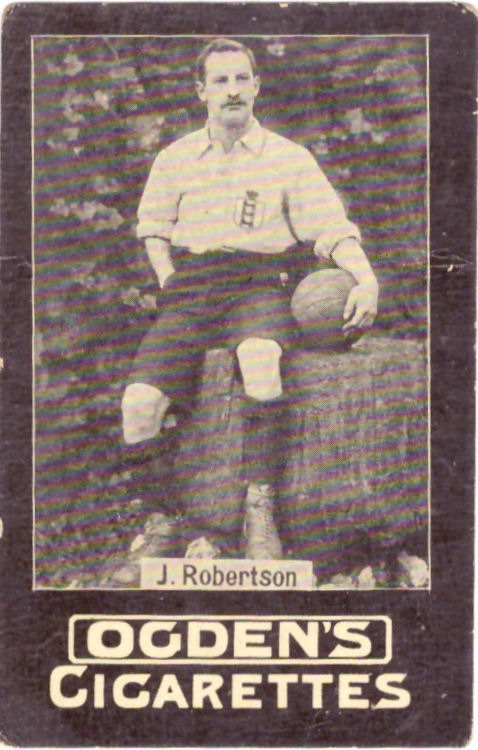
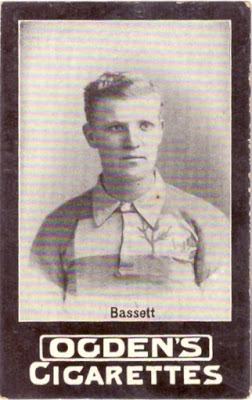
Card companies also make mistakes and mislabel cards. Ogden’s General Interest mislabel West Bromwich legend Billy Bassett and Scottish Fooballer Jack Robertson. Most would agree that the picture of Bassett are their true cards despite the mislabeled name.
Highest league
Another key aspect of a rookie is that it depicts the player at the highest league. This too can create confusion. For instance the Boxer Sugar Ray Leonard is depicted and profiled in the Sportscaster series in 1979 as boxing for the USA.
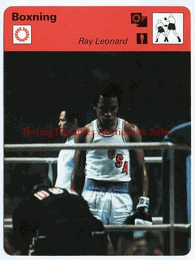
However, you will often see the 1981 Panini claiming to be rookie card.
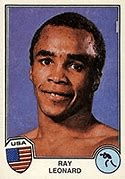
I think the same principal applies here. The 1979 Sportscaster card must be considered his rookie as it profiled Ray Leonard competing at the highest level as opposed to generally referencing the sport of boxing (note Sportscaster also created generic cards of sports in addition to profiled players).
Stickers are stickers and cards are cards
This is another area where there is some debate and confusion. Particularly in Europe, stickers were very common to collect and were thrown in with cards. My take is that a player can absolutely have a rookie that is the player’s rookie sticker. For those that collect rookie stickers, great! However, some of us just collect cards, and a rookie card is a card that is a rookie. Done.
Trying to fix the definition of “rookie card” is, of course, challenging, and open to refinement. I am trying to dig into the essence of what a rookie card is and why it is important to collectors. I am sure there are millions of examples and arguments based on the subtlety and preference of collectors.

 The Cardboard Junkie
3 thoughts on “How do we define “rookie” card?”