Legends of Association Football Series – John Charles
In this segment, only one player is going to be featured and that player is John Charles. There are two reasons that I am only featuring Charles:
1) additional biography for the achievements for a player, who is arguably the greatest that Britain has ever produced and
2) John Charles’ rookie card is a very complex case that requires in-depth analysis and explanation.
John Charles – Football League Career (1948–1966)
Often when ranking the all-time greatest player to come from Britain, you hear the name George Best. However, I (and a few others) believe this title actually belongs to John Charles and if I am being honest, I don’t think it is even close. While Best may have some highlight-reel goals, superb dribbling skills and classic quotes, his statistics and accomplishments never reached anywhere close to those of Charles. While it’s debatable that Best was even the top player on Manchester with Bobby Charlton and Dennis Law, Leeds in the 1950s on the other hand was rebranded as John Charles United. No other player has been so dominant that he was simultaneously considered the best offensive and defensive player in the League.
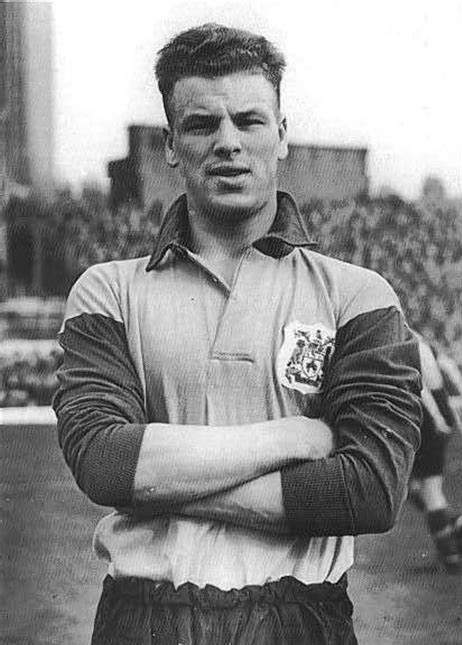
Charles got his start with a very weak Leeds United in 1949 at 17 years old, by the Spring of 1950 the papers were already heralding the new superstar’s talent as the key center half to watch in upcoming matches. He was even selected as center half for the Welsh National team at only 18 years old. Charles did not disappoint. His ability to read the game accompanied by his large stature, made an immediate impact wherever he played. His large stature also enabled him to dominate play as center back.
But then in 1952, something remarkable happened. Leeds United who was stuck in 2nd division desperately needed a goal score decided to try their star midfielder out at center forward. Charles responded by scoring 26 goals. The next season, he scored an incredible 42 goals. Think about that for a minute, imagine if Franz Beckenbauer, Bobby Moore or Virgil van Dijk switched to center forward and went on to win the golden boot? That was John Charles.
In 1955, Charles was appointed club captain and during the 1955–56 season, Charles pulled Leeds into promotion to the First Division in sparkling form, scoring 29 goals in 42 appearances.
At Leeds, he scored 157 goals in 297 games at times playing center back, center half and center forward. Even playing much of the time in a defensive position, he had a goal per game ratio of almost 0.53.
If we stopped right here, I think a fairly strong case has been made that Charles was one of the best overall footballers the game had ever seen. However, Charles was about to take his legend to a whole new level.
Charles left Leeds United in 1957 to join Juventus in the Seria A arguably a much stronger league if you consider Champions League appearances as any indication. Over the next five years, Charles’ play would cement himself in Juventus folklore. Charles scored an incredible 108 goals in 155 games which is almost 0.7 goals per game.
In 1997, Charles was voted by fans of the Italian game as “best-ever foreign import” – this over and above the likes of Platini, Law, Rush, Sivori, Gullit and Zidane (who had been at Juventus a year when the vote was taken).
What made Charles so special was his ability to seemlessly switch from an offensive to defensive positions often even during the same game. When Football League all-time scorer Jimmy Greaves ranked the 50 best British players of all time, it was King John Charles who topped the list.
Rookie Card: Year – 1950 – Manufacturer – Daily Herald – Set – Footballers – Card # 12
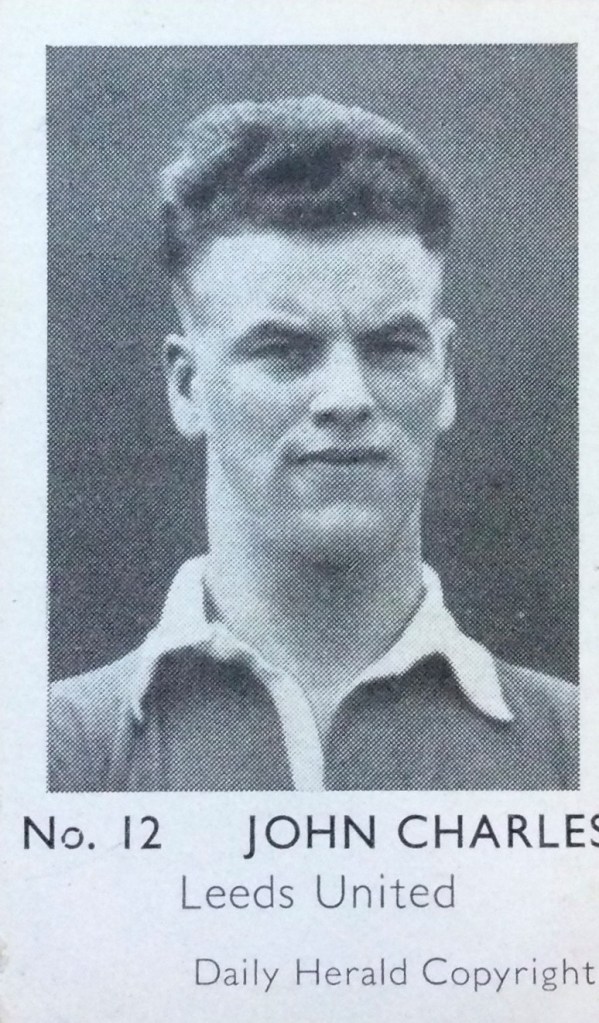
Card Notes:
Okay, if you just wanted to know John Charles rookie card, then look above and stop there, but if you want to why this is the rookie of John Charles, well, it’s going to take a while. This is you chance to get out.
Still here? Okay, well I warned you. Here we go.
John Charles’ rookie card comes from the Daily Herald set, which is usually labeled as being issued in 1954. However, this date is incorrect as the sets were issued over multiple year. Yes, I said “sets”. Broadly, the sets can be broken into two main categories:
1) cards that say “Daily Herald Copyright” “Sportfoto” on front and
2) cards that just say “Daily Herald Copyright”.
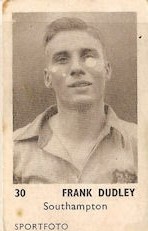
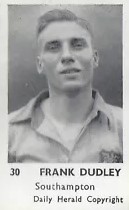
The Daily Herald version are older than the Sportfoto version and although there are variations in the Sportfoto sets (yes I said “sets” again) they are not important for this discussion, so I won’t explain those variations. The Sportfoto version sets start in either late 1952 or 1953 and end in 1954.
Daily Herald Copyright Versions
Okay, so now looking at the Daily Herald Copyright sets (yup again), there are a couple of points to note.
Bold versus Regular Font
The first major variation is that the earlier cards had the names and number of the player regular (unbolded) font, but the printers decided to bold the name and numbers in later printings. The Daily Herald continued to bold the name and number for the rest of series including the Sportfoto series.

As you can see, the card on the left has player name and number bolded and the one on the right is unbolded and is an earlier printing.
Team Names
Another point to note is that in the older series the cards typically used longer or more descriptive team names. As the series went on, the team names became shortened e.g. Tottenham became Spurs or Huddersfield Town was shortened to just Huddersfield in later series.
“No.” before the number
Finally, some cards include a “No.” before the card number in the set. There were only the first 12 cards originally issued for this set, and it was issued in mid 1950. I call this the “First Series” of the Daily Herald version with the text is written in regular (non-bolded font). The full set checklist and photos can be found here.
The next issue, which I will call the “Second Series”, does not have “No.” before the number, but have the same regular font. The Second Series includes both the first 12 cards and an additional 20 cards bringing the total to 32. The Second Series cards were likely first issued in the spring of 1951 but not before.
The next Third Series were issued after the Second Series and included all the same players as the second series, but the font is now bolded.


Dating the Daily Herald Series General
As I mentioned before, 1954 is often provided as the date these cards were issued. However there were undoubtedly multiple issues over multiple years. It requires looking at the players and comparing with the card attributes to determine when each type of cards were issued.
Dating the Second and Third Series
1. Neil Franklin card #16 is shown with Hull city. Franklin transferred from Stoke to Hull on February 1951. Therefore, the second and third series must have been issued after this date. Note that Franklin is shown in a suit and not in a player uniform. Also note that this card 16 is in the second series and not one of the first 12 cards.


2. Charlie Mitten (card #22) played for Manchester United in 1950, but left the team after summer tour in the United States and was transferred to Santa Fe Bogata on July 1 1950. A Second Series card shows Mitten wearing a Man U jersey but describes him as playing for Bogata. Mitten was transferred from Bogata to Fulham on December 1. 1951. The later Sportfoto version lists him as playing for Fulham and was likely released some time in 1952.

3. Frank Dudley (card #30) Like Franklin, Dudley was transferred from Leeds to Southampton in February 1951. As a result, the third Series must have been issued some time after this date.
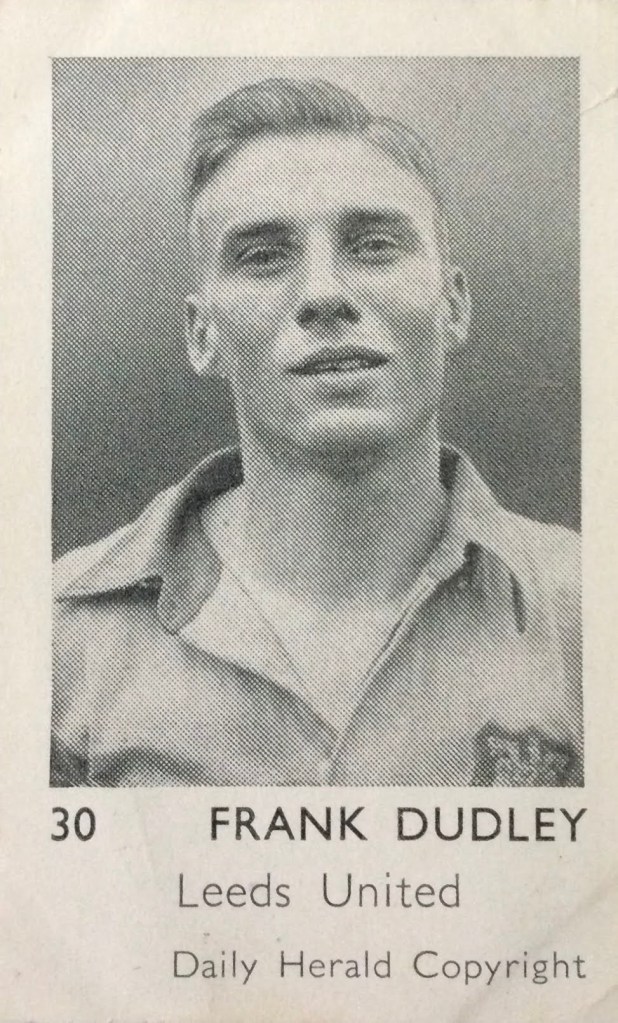
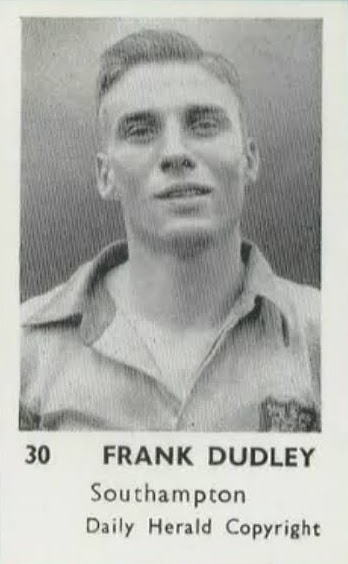
Dudley’s Leeds card demonstrates that the lighter font Second Series was issued prior to the bolded font Third Series.
Dating the First Series
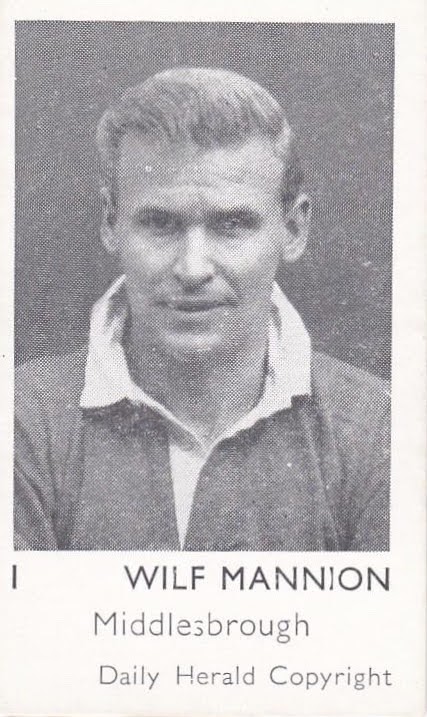
Trevor Ford card #8 is most significant card for dating the series. Ford is shown in the First Series card as playing for Aston Villa. However, he is shown in the Third Series playing for Sunderland. Ford was transferred from Aston Villa to Sunderland on October 1, 1950.


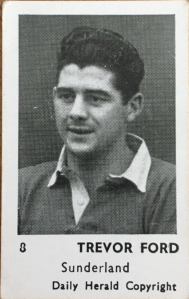
This conclusively dates the “First Series” as being issued in the 1950 and the Second Series some time after Franklin joined Hull in February 1951. I believe but have not confirmed that the First Series issued only contained the first 12 player in series. The card stock is also thinner than later series suggesting that it was a prototype or proof. As a result, the first series cards are very rare and hard to find in good condition.
The first series definitely predates the Godfrey Phillips Sports Cigarettes card of 1951 often thought to be John Charles’ rookie card.
The key attributes for determining the Daily Herald John Charles Rookie card are:
- the card does not include Sportfoto on the face of the card
- the text is written in regular font (unbolded)
- the card includes “No.” before the number
If you find these three attributes on your John Charles Daily Herald card, then you have likely found yourself the rookie card of the best football player Britain ever produced.

 The Cardboard Junkie
2 thoughts on “LOAFRS 15 – John Charles’ Rookie Card”