The BIG Six
Determining the dates of pre-1900 cigarette cards has been a notoriously challenging exercise. The following section reveals through research what are likely date(s) for which the sets were issued. I will focus on the big six in the order from oldest to newest with newest still being over a 120 years ago.
The sets described are the following: 1) Marcus (Kinnear) Football Clubs & Colours 2) Ogden’s Cigarettes Guinea Gold 3) Godfrey Phillips & Sons General Interest 4) Cohen Weenen & Co. Circus Girl Heroes of Sport, 5) Robert Sinclair Footballers and 6) Ogden’s Cigarettes Guinea Gold Footballers and Cyclists.
1. Marcus Kinnear Football Club Colours
Date first issued circa Mid 1896
This set is the earliest of the cigarette football cards series and was released in 1896.
The players were painted and printed as chromolithographs possibly to avoid copyright payments from photographers.
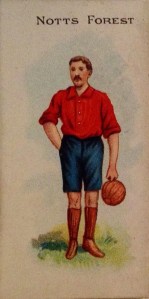
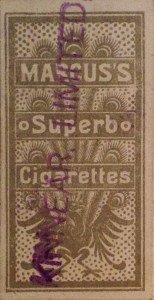
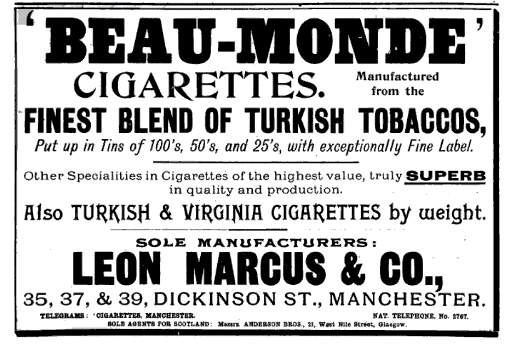
Charles Maxwell Kinnear became the principal owner from Leon Marcus Sogolowitch near the end of 1895. The company issued their new brand of Marcus Cigarettes called Handicap along with cards of Leading Cricketers prior to May 1896. The sport-focused Handicap cigarettes were likely named after the Handicap horse races and were marketed towards male smokers. It is expected that the Football Club Colours set was issued shortly after the Leading Cricketers set in the middle of 1896. However, there was a fire in the Manchester factory in the fall of 1896 and Kinnear decided to move operations to Liverpool. Kinnear also decided to evolve the company from Leon Marcus & Co. into Kinnear Ltd. As part of the rebranding, Kinnear began stamping the backs of the Marcus cards with a Kinnear Ltd. in April 1897 to clarify ownership. The cards were issued under the Superb brand of cigarettes in a white and gold case, which matches the back colours of the cards. The teams and players in the set are based upon the 1894/95 football season.
2. Ogden’s Guinea Gold Footballers Base M(d) Set 385s
Date First issued circa August,1896
Ogden’s provided a “photo” with their cigarettes as early as September 1894. However, through 1895 and most of 1896 Ogden’s stopped advertising a photograph with the packets. A new advertising campaign in late August of 1896 “copyright photograph” as well as train insurance coupon.
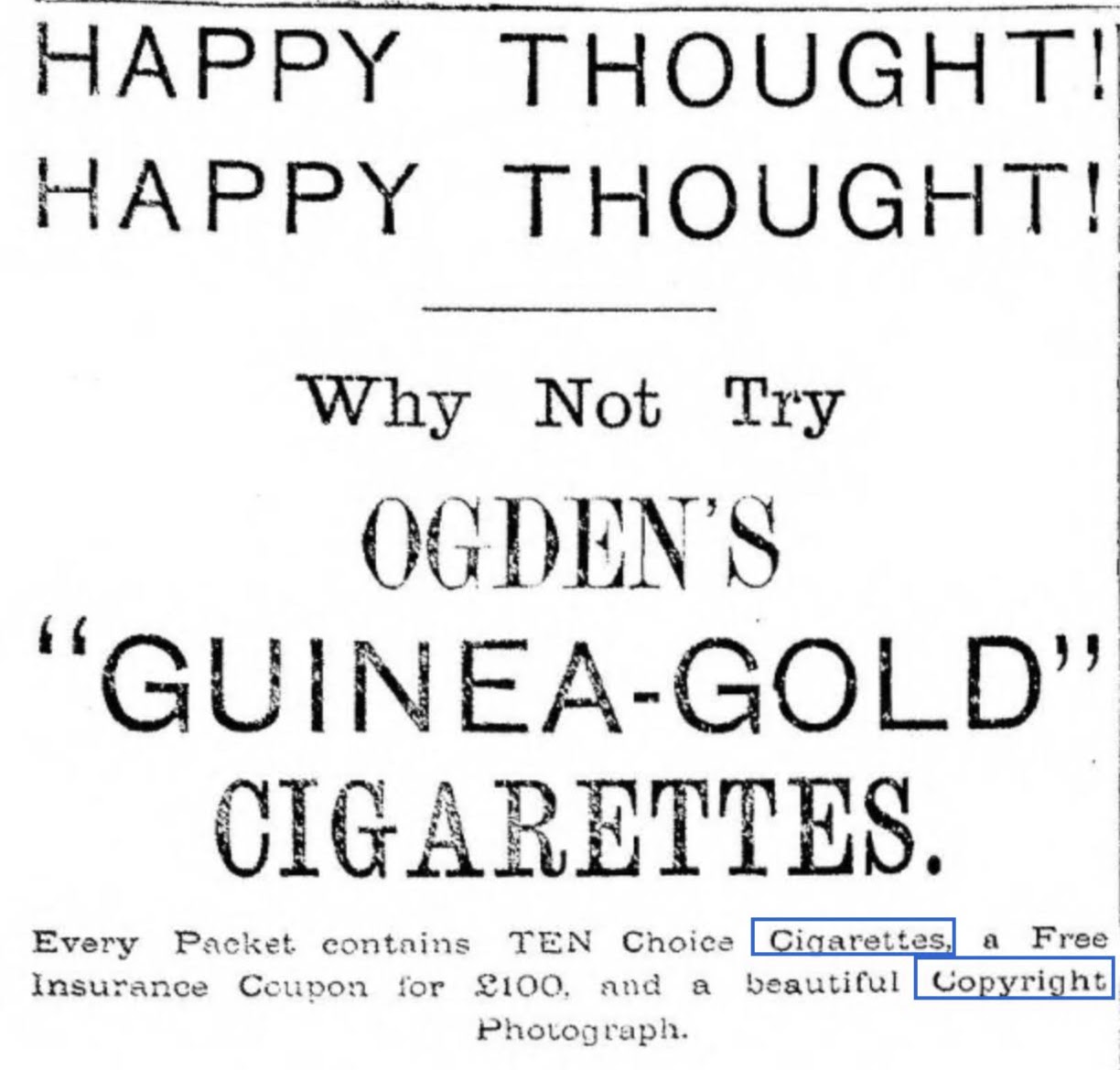
I believe they acquired the copyright to produce most of these photographic cards from photographers Symmons and Thiele.
Symmons and Thiele were established in 1894 and specialized in photography of sports and sports teams. Many of the photographs of the footballers are easily identified as Symmons and Thiele as they used similar backgrounds and settings. Symmons and Thiele became press photographers and their photos can be found in Sportfolio, the Sketch and Boys Own Paper and multiple others that were released in 1895. However, the partnership dissolved in May 1896 and Reinhold Thiele continued producing photographs on his own after this date. Along with magazines and newspapers, Symmons and Thiele licensed their copyright photos to different cigarette card manufacturers including Ogden’s and Cohen Weenen & Co.
The Guinea Gold Series is composed of 13 Bases labeled Base A – Base M. The bases refer to differences in the writing of the Guinea Gold logo.
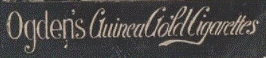

However, there are even minor variations within the Base M Guinea Gold logo which entitled “A”, “B” “b” and “C” variants. The Guinea Gold Footballers have the B variant.
The first Guinea Gold Footballers is a Base M from the unnumbered set called 385s of which there are five subjects with the name captions written in capital letters.
Ma -Royalty
Mb – Cricketers
Mc – Cyclists
Md – Footballers (including Rugby)
Me – Pantomine and Theatre Group
As a result, cards from this set are described as Guinea Gold Base M(d) variant B from 385s.
From the Base M subject (d) set, there are two distinct types of captions: one being a narrow caption and the other a wide caption.
The wide caption cards are likely the first cards in the series that were issued: however, this is unconfirmed. There were only 8 cards issued and in addition to having a slightly wider caption of the team names, the cards simply used a photograph without any modification to the background. These cards were possibly, but not definitely, issued prior to the August 1896 date. However, Ogden’s decided to update the style of their cards with a a narrow caption version.
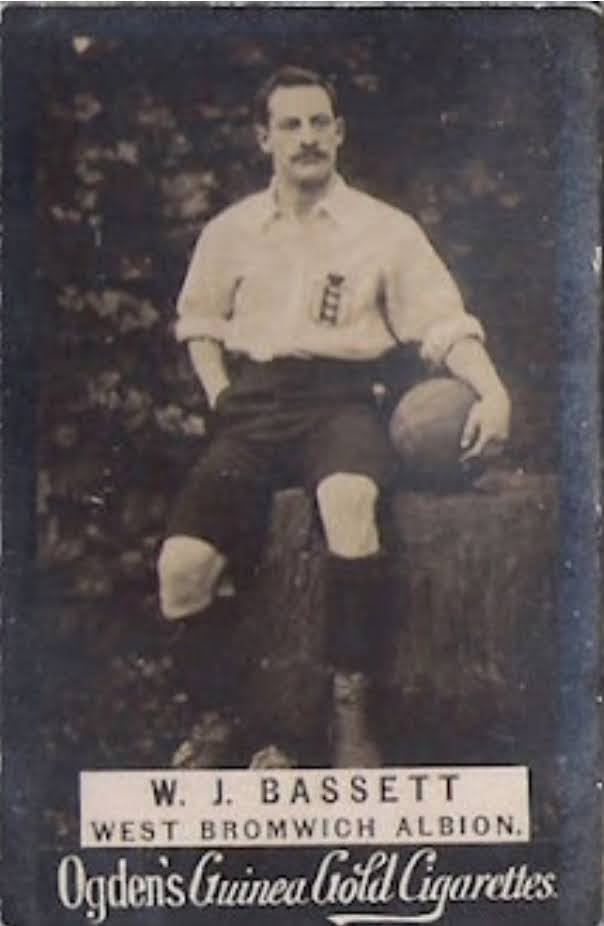
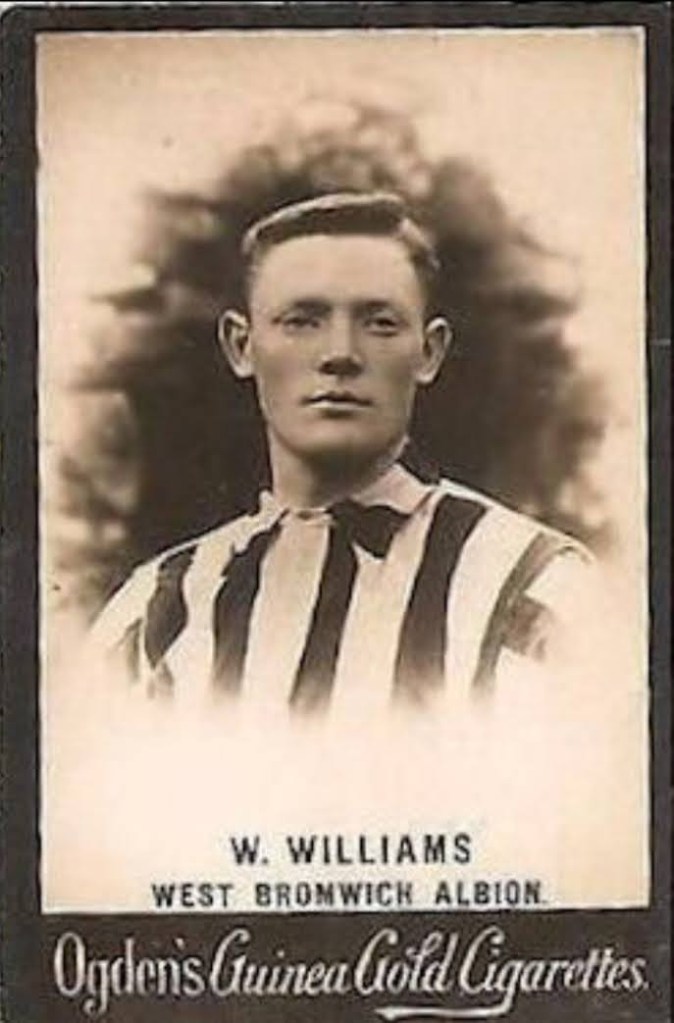
The narrow caption cards with the backgrounds whited out. This technique was carried forward to future issues notably Queen Victoria for her 60 year Jubilee and even to the 1899 Guinea Gold Footballers and Cyclists Series.
In some cases, the pictures were cropped from team pictures such as with players from Sheffield Wednesday and Aston Villa and the white background technique was used to create the card. The set features eight Sheffield Wednesday players as they won the FA Cup in April 1896.
The team picture in the Illustrated Sporting and Dramatic News April 25, 1896 serves as the basis for all the Sheffield Wednesday cards in the set.
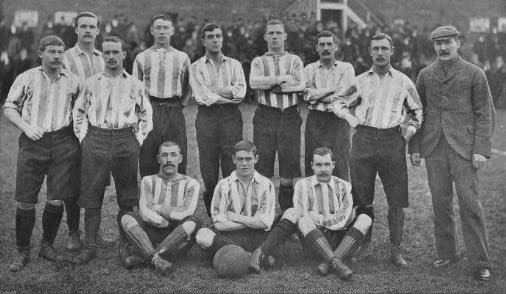
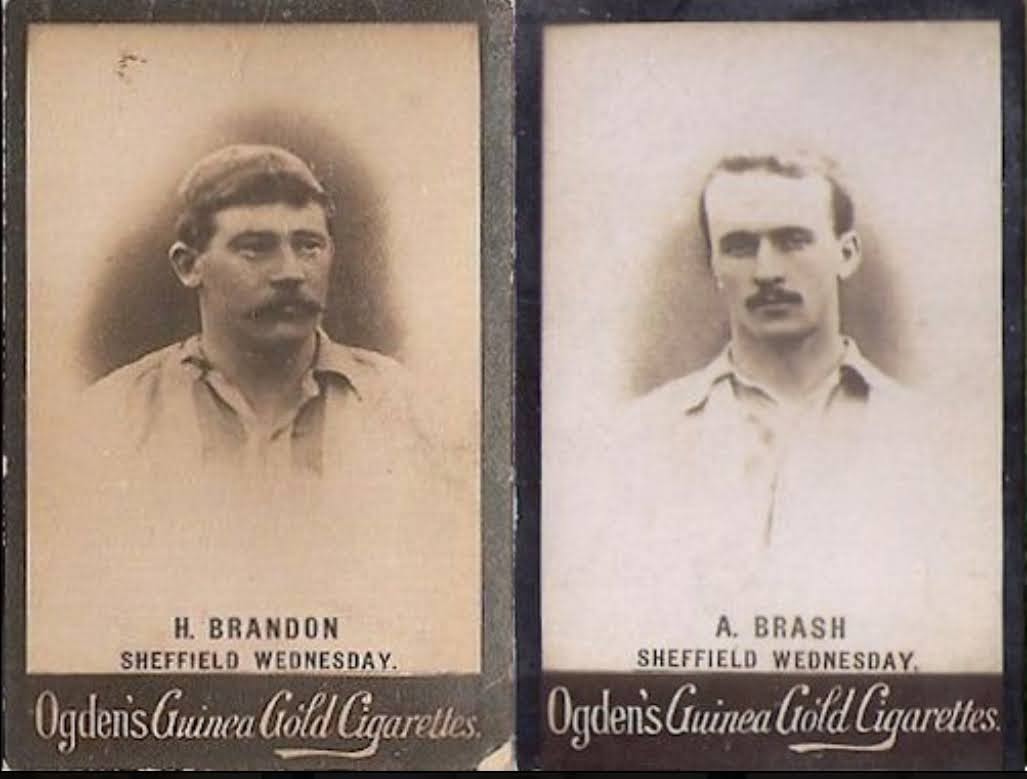
Ogden’s also used several photos of footballers who featured in the magazine the Sportfolio, which was released monthly for six installments from September in 1895. Most of the photos were again taken by Symmons and Thiele and were included in both the wide and narrow caption versions of the set.
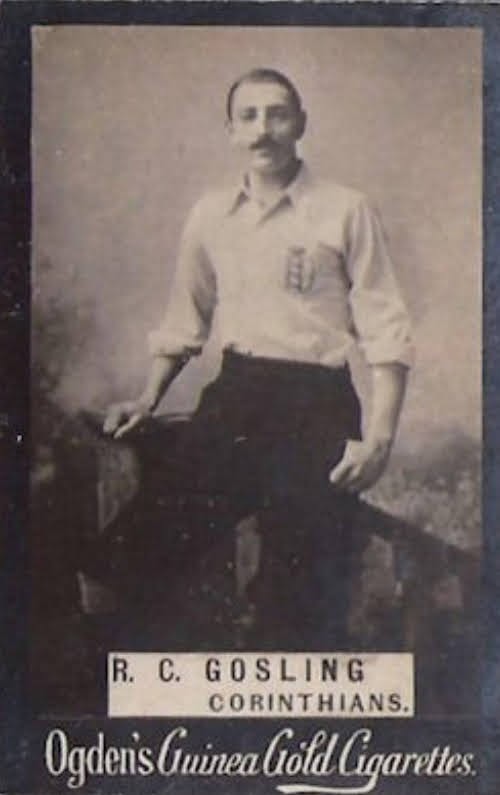
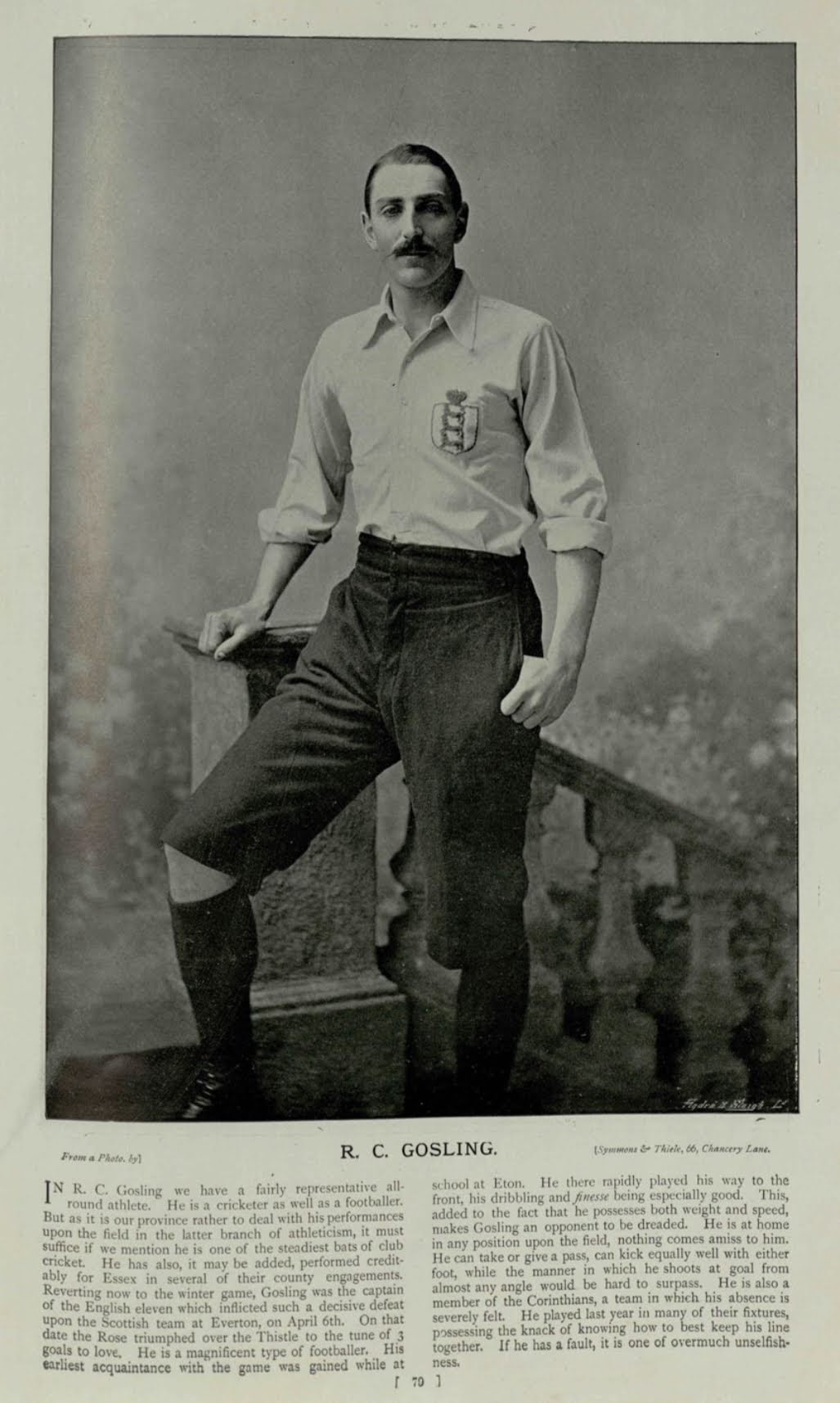
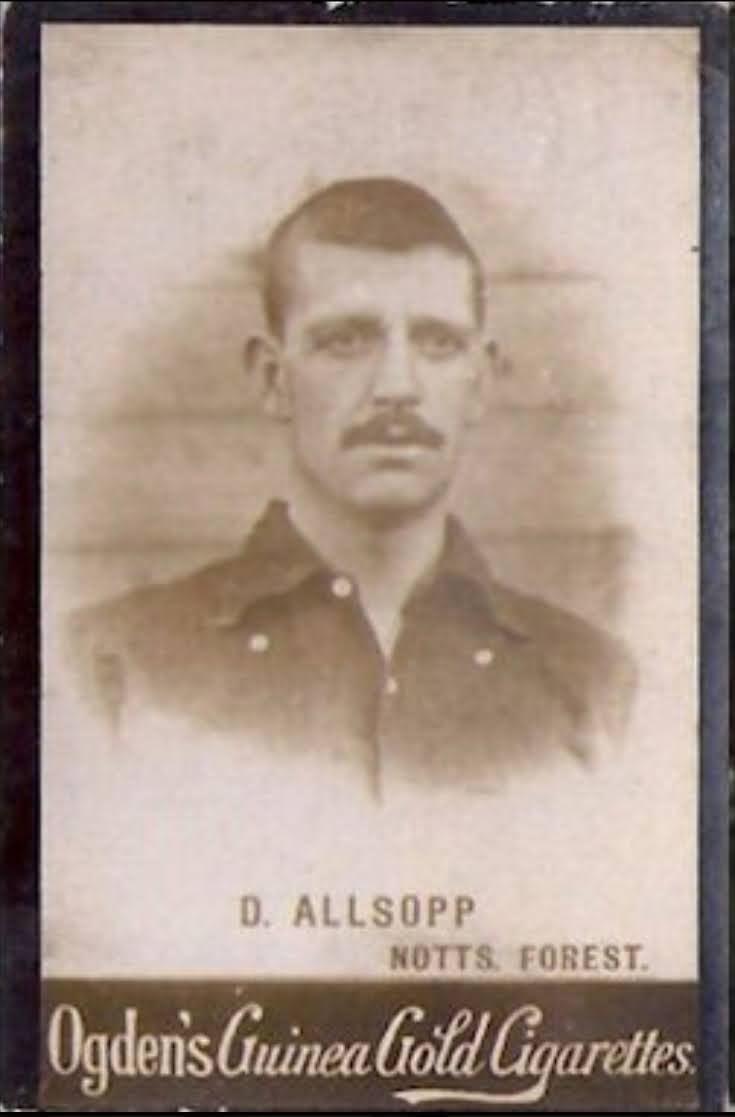
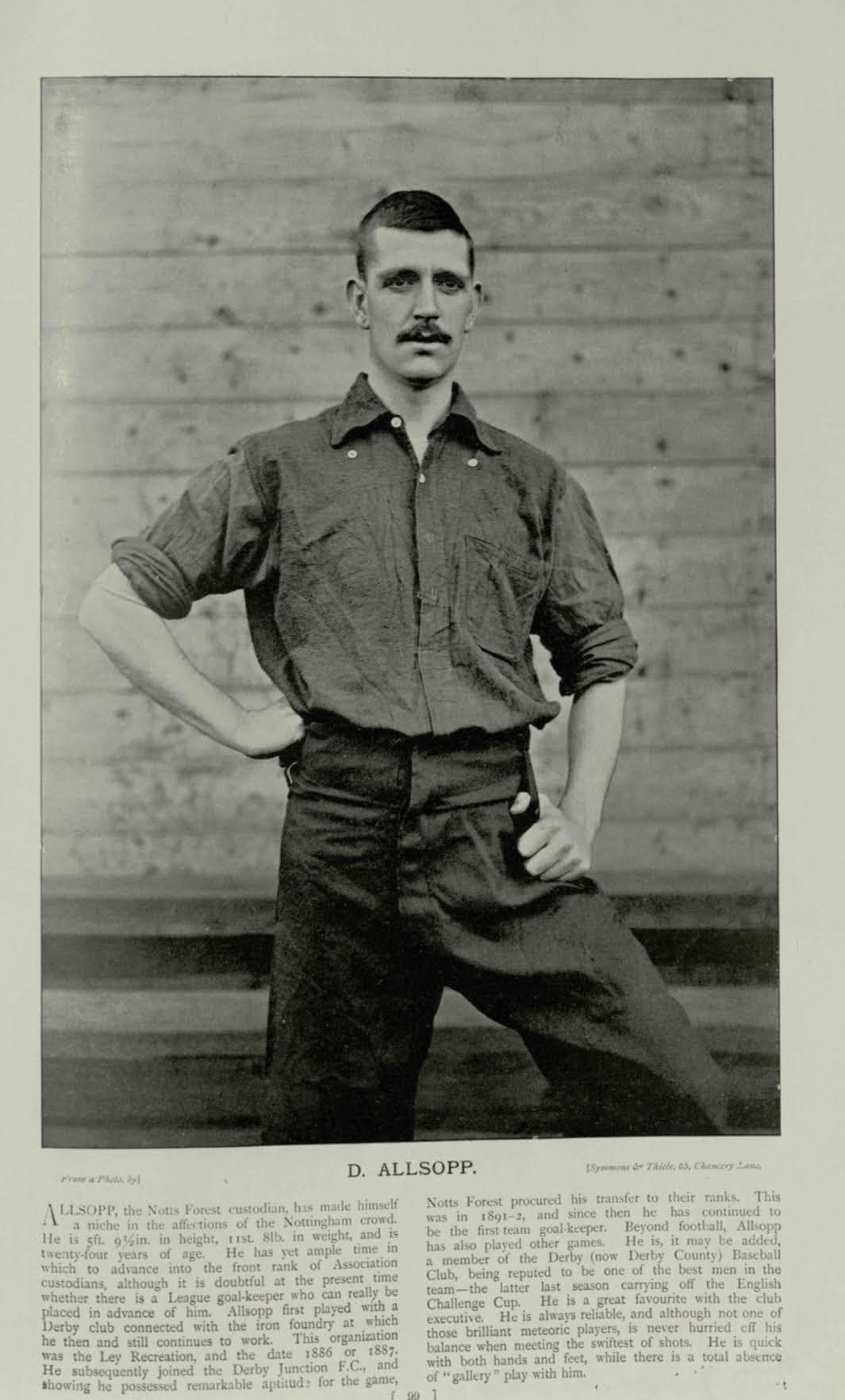
Sunderland player Matthew Ferguson played his first game for the club at the start of the season in September 1896 suggesting that some players were included after the August release date. However, Ferguson was secured by Sunderland as early as May 1896. However, the pictures used for the Aston Villa players were taken from a team photo from the 1896/97 season later than September 1896. Therefore it is likely that these narrow caption cards were issued later than the wide caption likely toward the end of 1896.
3. Godfrey Phillips General Interest Set
Date first issued circa November 1896
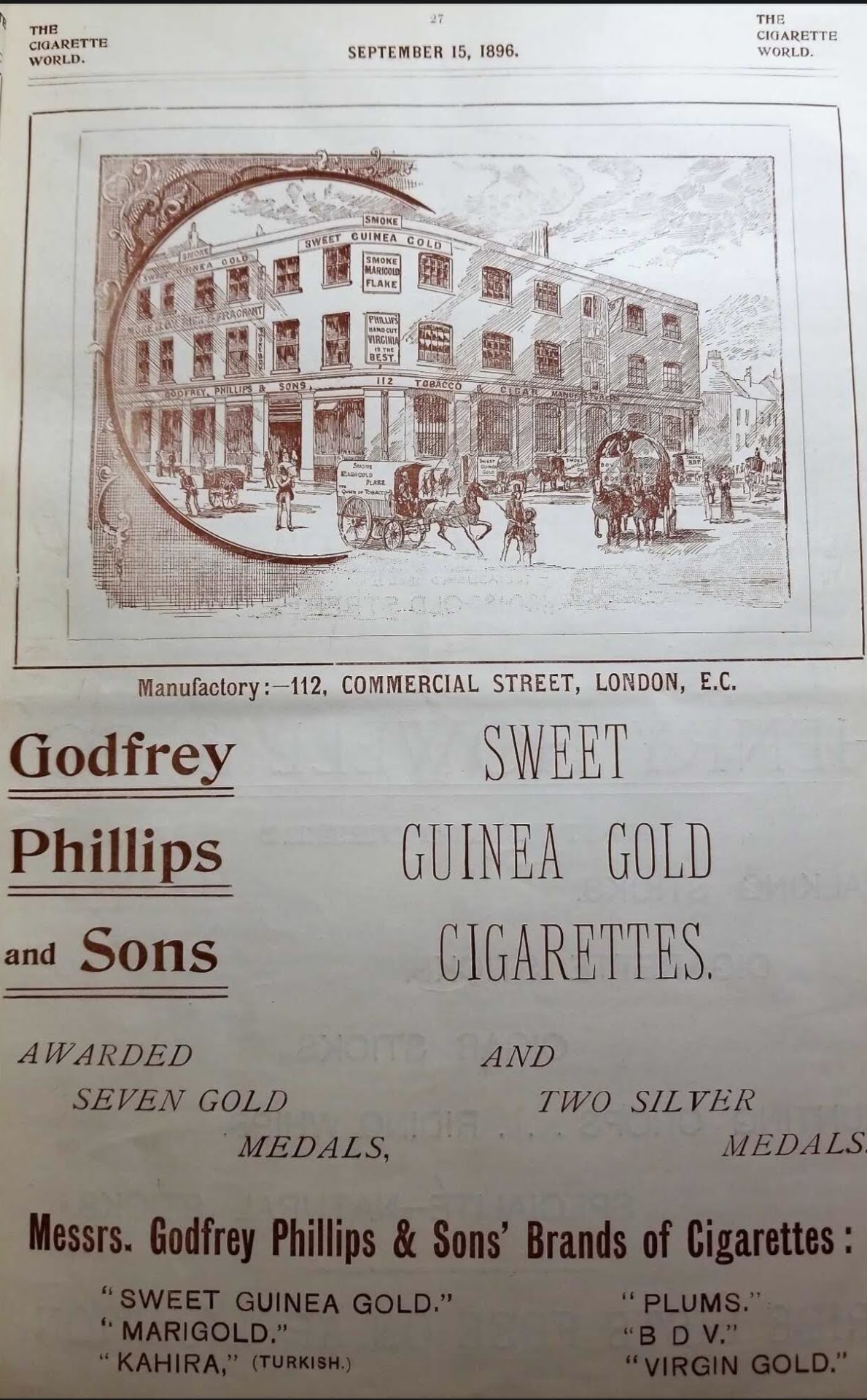
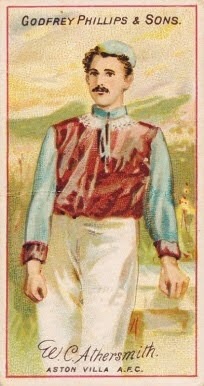
The next set was a General Interest first released in by Godfrey Phillips around November 1896. It was issued in packs of Sweet Guinea Gold, not to be confused with Ogden’s Guinea Gold.
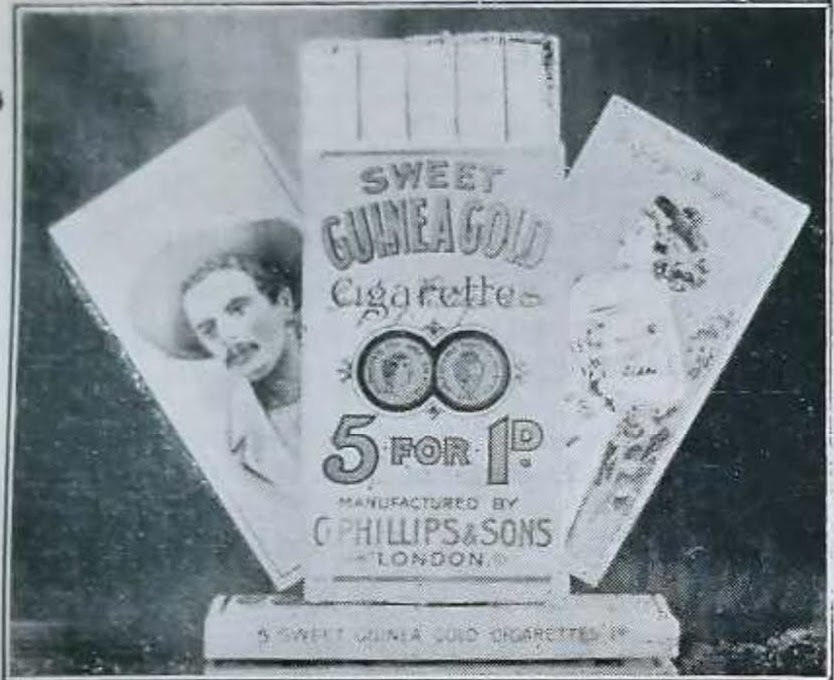

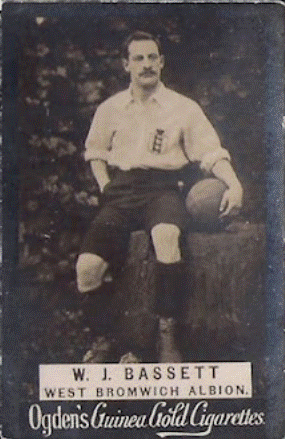
In addition to an odd array of other general interest subjects, the set contained two legendary footballers Billy Bassett of West Bromwich Albion and Charlie Athersmith of Aston Villa, who faced off in the FA Cup earlier that year.

4. Cohen Weenen & Co. Circus Girl
Date first issued circa August 1897
In the mid-1890s, cigarette manufacturers were competing to gain a hold of the female market. As such, many brands directed their offerings towards women. Cohen Weenen & Co. launched a brand called Gaiety Girl after the Gaiety Theatre London in 1896. As the name implies a gaiety girl was a girl out to have fun, socialize and of course, smoke cigarettes.
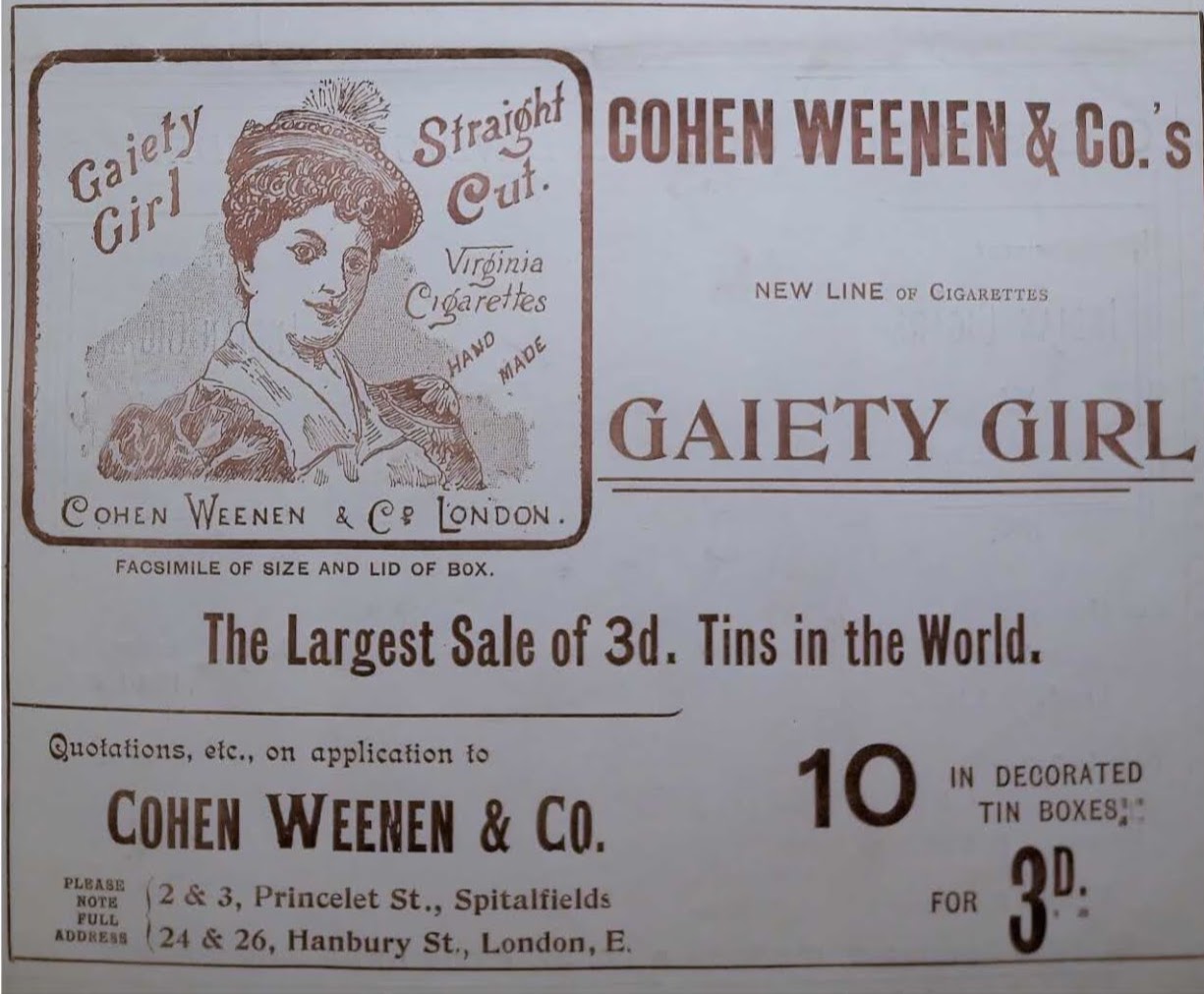
The Gaiety Theatre in London produced a play called the Circus Girl in December 1896 that went on to enjoy considerable success. Shortly after in March 1897, Cohen and Weenen decided to take advantage of the success of play and trademarked a new brand of cigarettes by the same name.
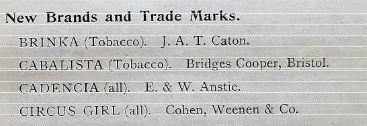
The product was put on the market in August of 1897.
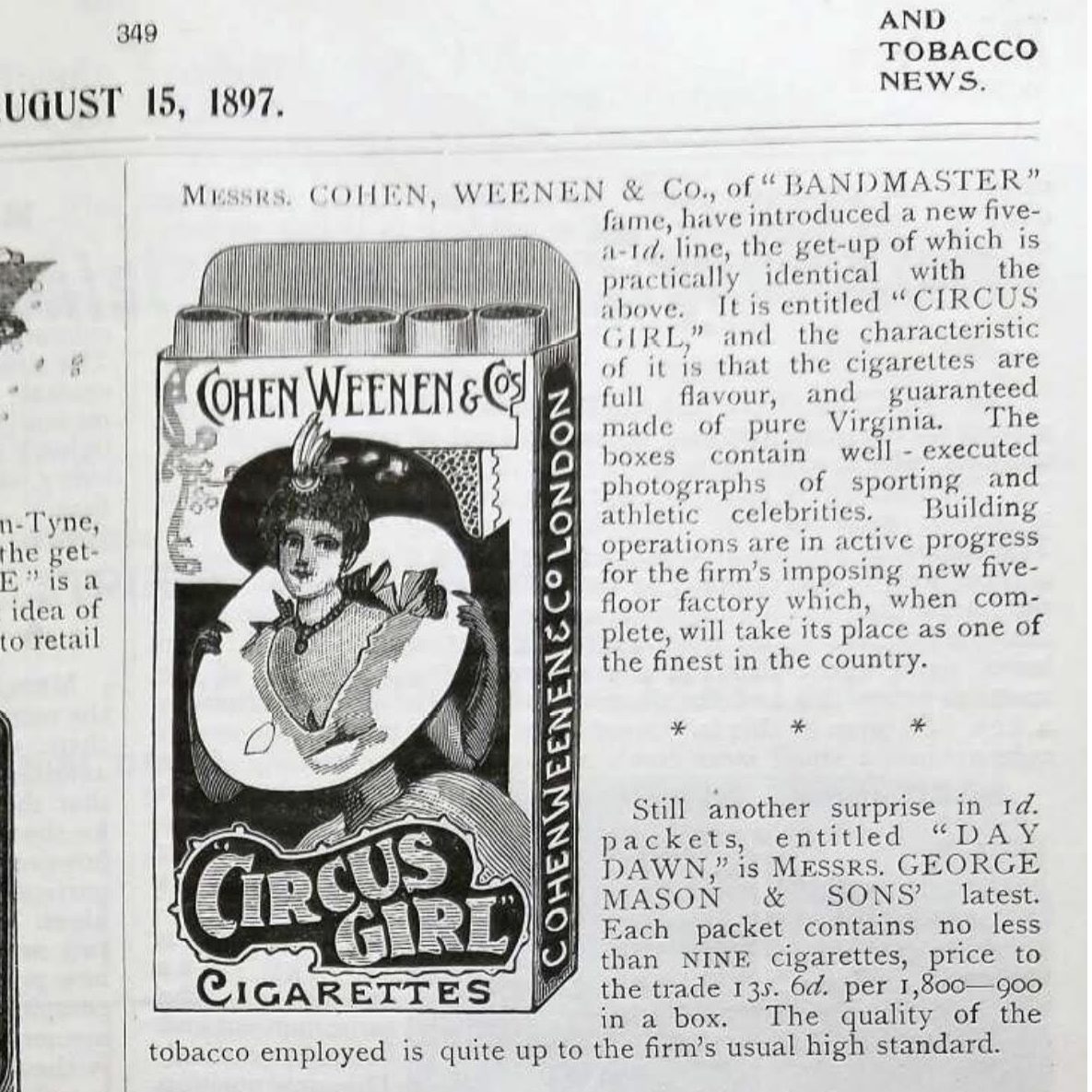
Like Ogden’s had done in 1896, Cohen & Weenen also used many images from the Symmons and Thiele. Consequently, there is several cases of overlap between the two sets.

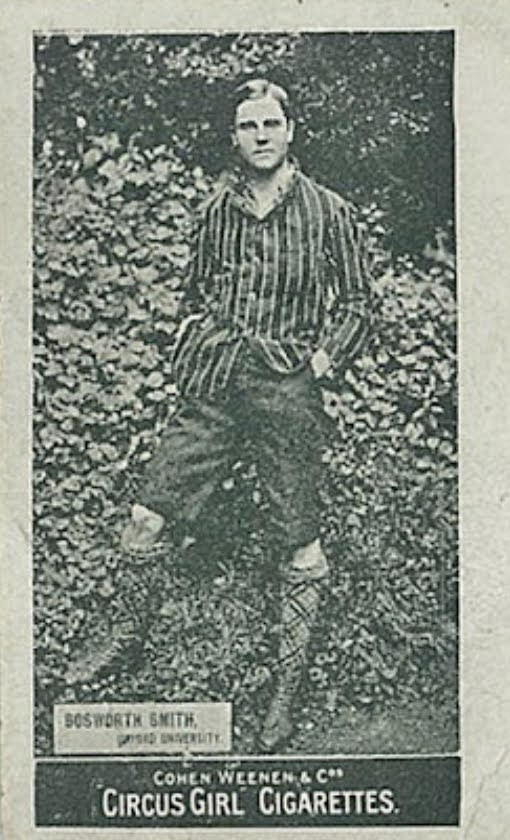
However, Cohen & Weenen did include some photos that were not included in the Ogden’s set such as Bosworth Smith. This photo was also taken from Symmons and Thiele and is included in the Sportfolio.
One interesting thing to note, is that Ogden’s made several mistakes of both spelling and teams. These mistakes often carried through to the cards in the Circus Girl sets suggesting that the cards were in many cases copied from the Guinea Gold set.
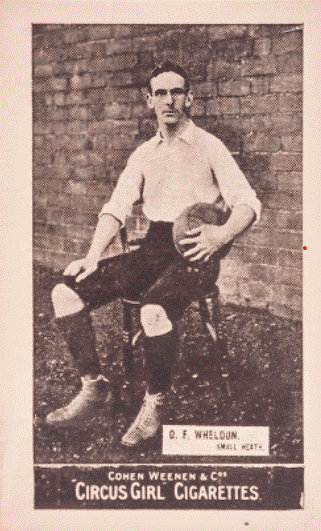
Despite the sizeable overlap between the Guinea Gold and Circus Girl series, there were also some cards added to the Circus Girl set for players that were up-and-coming talents in the 1896/97 season such as Villa’s top scorer Fred Wheldon. Note, the picture was taken from Reinhold Thiele (post May 1896) with Small Heath prior to the 1896-97 season at Aston Villa.
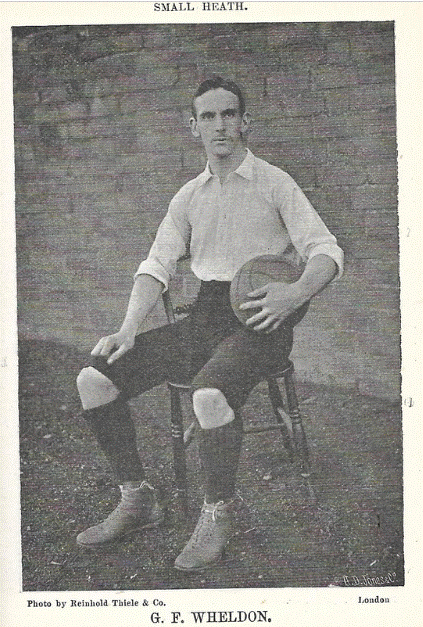
Also certain players, such as Bob Chatt who had not distinguished themselves in the 1896/97 season were not included despite appearing in the Guinea Gold set.
5. Robert Sinclair Cigarettes Footballers
Sunderland date first issued circa September 1898
Robert Sinclair’s Cigarettes, which was based in Newcastle, issued sets of both Sunderland and Newcastle United in 1898. The cards for these sets are exceptionally rare so very little is known about them. The sets come in two distinct types of photo colours: black and white and a yellowish tinge.
The Sunderland set is characterized by a centered serif font at the bottom of the card.
One of the players, William Raisbeck (brother of Liverpool legend Alex Raisbeck) was reported to be transferred to Sunderland in July 15, 1898 for the 1898 /1899 season (The Scottish Referee).
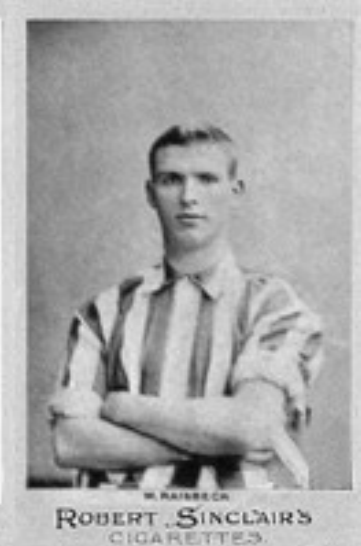
Another player in the set, Jimmy Chalmers was transferred from Sunderland to Preston North End in October 1898. Therefore, it is likely the set was issued at the beginning of the 1898 season in either August and September.
Newcastle United date first issued circa September 1898
Like the Sunderland set, this set was also issued during the beginning of the 1898/99 season. Interestingly, the design of the cards is quite different from the Sunderland cards suggesting they were manufactured and distributed in separate brands of Sinclair cigarettes. Newcastle had just been promoted to the First Division for the first time in the club’s history so it was likely these cards were issued in response to this feat. The cards include Matt Kingsley who joined Newcastle for the 1898 season so the cards must have issued shortly after this date.
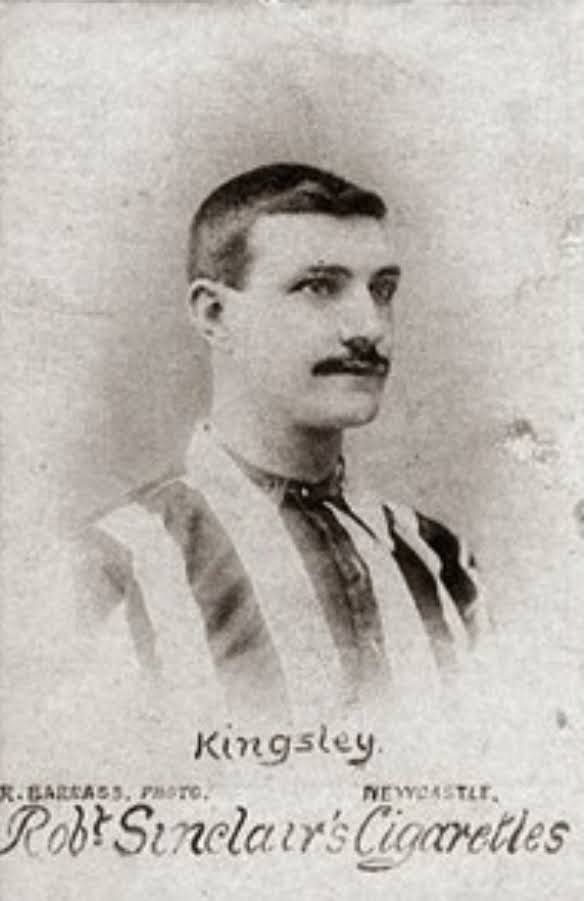
6. Ogden’s Guinea Gold Footballers and Cyclists
Date first Issued circa post April 1899
Ogden’s had issued cards based upon the Sheffield Wednesday in their Guinea Gold series in 1896. The company decided to release another set entitled Footballers and Cyclists honouring the Sheffield United team that won the FA Cup in 1899.
The Sheffield United players pictured in Footballers and Cyclists series are taken from a team photo shoot by Jasper Redfern. The Sheffield team picture which won the FA cup on April 15, appeared in the Sketch magazine in April 19 1899.
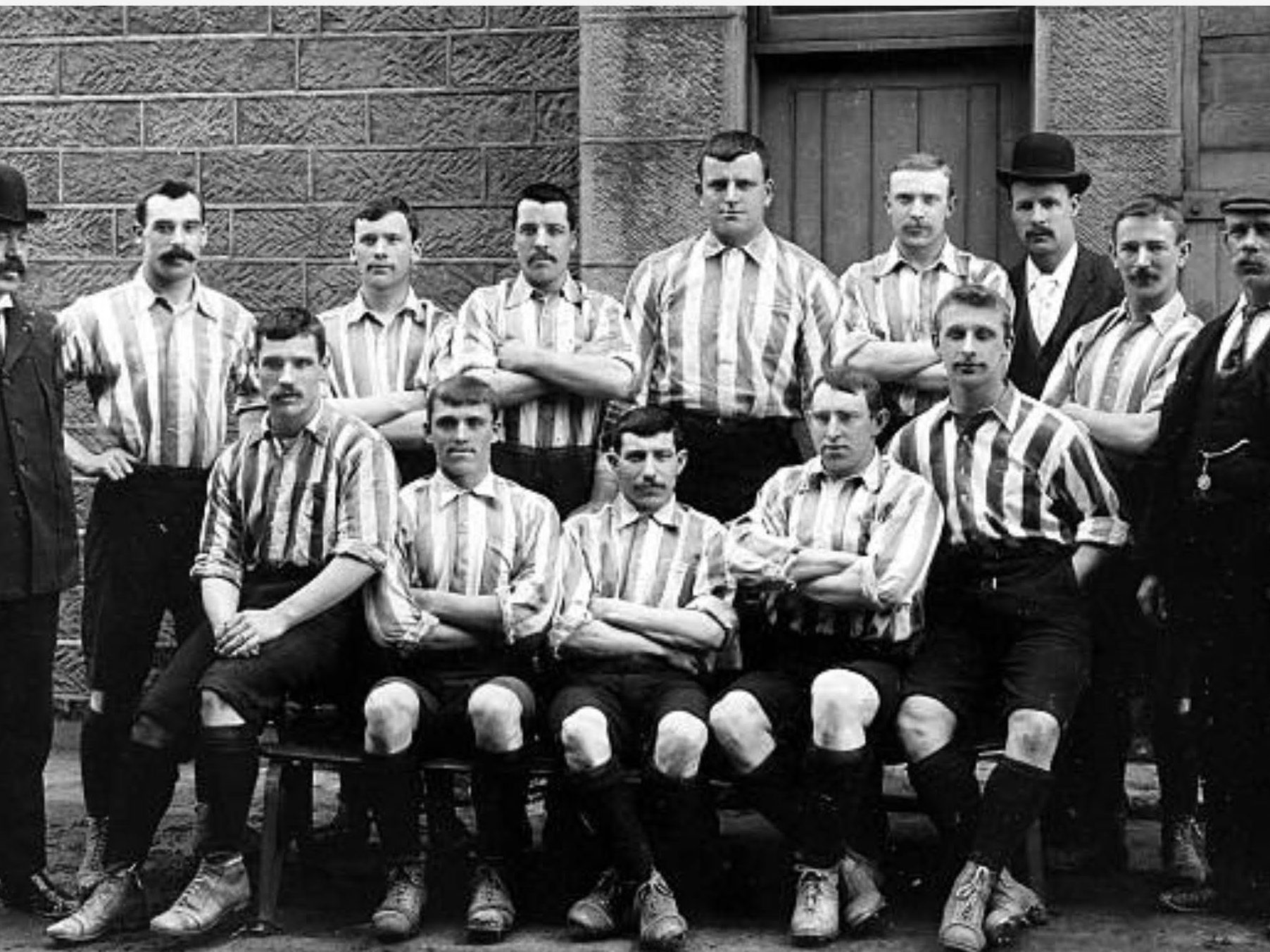
Although it is certain that the Ogden’s pictures were taken from the team photo shoot above, there must have been a second photo as Priest’s eyes were closed in the photo above but not in the Guinea Gold picture. In addition, Ernest Needham’s head is in a slightly different position than the photo above than in his Ogden’s card


 The Cardboard Junkie
2 thoughts on “Issue Dates of Pre-1900 Association Football Card Sets”